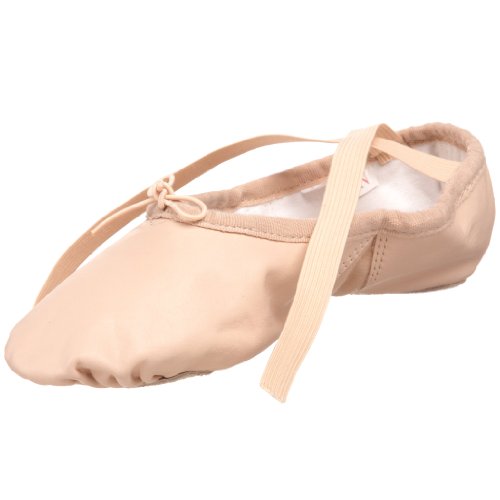
A full sole has one continuous sole section; a split sole separates the forefoot and heel pads. Full soles are commonly required in children’s and introductory programs, while split soles allow easier articulation. The teacher’s requirement decides the category.
Construction under the foot
A full sole places a continuous section beneath the midfoot. A split sole leaves the arch area without an outsole, separating forefoot and heel pads. This changes flexibility and floor feedback, but neither construction guarantees technique, strength, or a correct fit.
Why studios specify full soles
Teachers may use full soles for curriculum consistency and a deliberate feeling through the foot. Avoid the exaggerated claim that a shoe ‘builds an arch.’ It provides a construction and resistance profile; training and anatomy determine development.
Why dancers choose split soles
Split soles can articulate through the arch with less material under the midfoot and may create a closer silhouette. That does not make them automatically advanced or superior. Pad placement, upper shape, and teacher approval still matter.
Decode the dress code
‘Full sole’ and ‘split sole’ are precise. ‘Ballet slippers’ is not. If the studio lists only a color or material, ask which construction is accepted before ordering, sewing, or removing tags.
| Decision | Full sole | Split sole |
|---|---|---|
| Construction | Continuous section | Separated pads |
| Arch feel | More material under midfoot | Easier articulation |
| Common setting | Children and first programs | Adult and experienced classes |
| Main rule | Teacher approval | Teacher approval |
Questions dancers and parents ask
Are full soles only for beginners?
No, though they are often specified for introductory programs.
Do split soles improve arches?
They may contour more closely but do not change anatomy or technique.
Can beginners wear split soles?
Yes when the teacher permits them.
Which lasts longer?
Material, fit, floor, and class frequency matter more.
Continue the decision
Use the next page that matches the unresolved part of the decision. If a teacher’s requirement differs from this guide, the teacher’s rule wins.