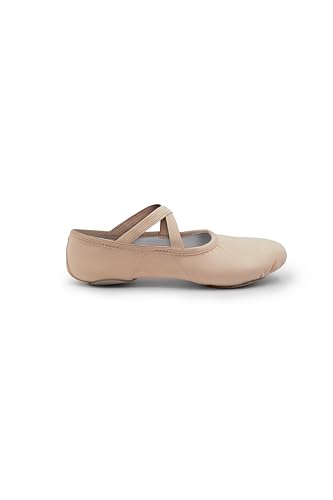
Wide feet need enough forefoot volume and the right shape—not simply a longer shoe. Look for model-specific widths, relaxed flat toes, smooth side contact, and a heel that stays secure.
Width is more than one number
Consider forefoot breadth, toe taper, instep volume, heel width, and vamp depth. Two feet with the same measured width can prefer different lasts because one is square at the toes and another tapers sharply.
Do not solve width with length
A longer shoe may move the sole pads, create heel gaps, and leave arch bagging while the forefoot still feels wrong. Return to a length that keeps the toes flat and compare a wider option or a differently shaped model.
Match the last to the foot
Rounder or squarer toe areas may give a broad forefoot more usable room. Stretch canvas can reduce loose fabric but cannot turn a narrow last into a wide one. Leather may mold, but it should not be painfully tight while waiting for that change.
Check both edges of the fit
Watch the little-toe joint and metatarsal spread during demi-plié while confirming the heel remains seated on a rise. If one foot is wider, fit the demanding foot and verify that the smaller foot does not become unstable.
| Signal | Likely issue | Next step |
|---|---|---|
| Toes overlap | Too narrow or short | Try width or new last |
| Outer edge pressure | Forefoot too narrow | Broader toe shape |
| Heel pocket | Length used for width | Correct length, wider model |
| Arch bagging | Volume mismatch | Lower-volume or stretch upper |
Questions dancers and parents ask
Should wide feet size up?
Not automatically; try correct length in a wider width or last.
Is stretch canvas best?
It can contour well but cannot correct a fundamentally narrow shape.
Do drawstrings add width?
No; they only refine the opening.
What if one foot is wider?
Fit the more demanding foot, then verify security on the smaller one.
Continue the decision
Use the next page that matches the unresolved part of the decision. If a teacher’s requirement differs from this guide, the teacher’s rule wins.