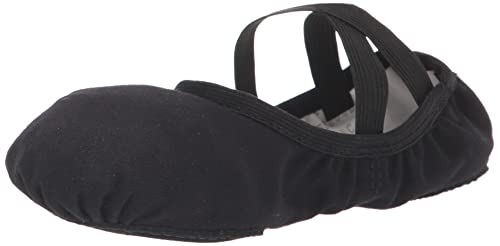
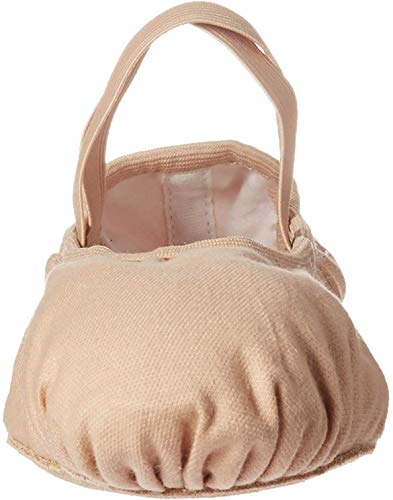
Ballet shoes should fit like a smooth second skin: toes flat and reaching the front, heel secure, and minimal loose fabric. They should never cause curled toes, numbness, sharp pressure, or deep elastic marks.
The 60-second standing test
Stand with weight even on both feet. Every toe should lie flat and relaxed, with light contact at the front rather than a hard jam. Look for smooth side contact, correctly placed sole pads, and a heel that sits inside the shoe without a large pocket. Check both feet independently; the longer or wider foot often reveals the correct starting size.
The movement test
Hold a barre or sturdy support and make a gentle demi-plié, a slow rise, a tendu, and a pointed foot. These movements expose problems that standing can hide. The heel should remain seated, the forefoot pad should stay under the ball of the foot, and the dancer should not claw the toes to keep the shoe attached.
Snug versus too small
Snug means the upper follows the foot and the shoe moves with it. Too small means toes curl or overlap, nails receive pressure, the binding cuts in, or sensation changes. A new shoe may feel close, but pain is not a break-in requirement. Never choose a painful size because a review recommends sizing down.
When the shape—not the size—is wrong
A longer shoe does not necessarily solve width, and a shorter shoe does not reliably stop heel slip. Try another width, vamp depth, heel shape, elastic arrangement, or model when the length is correct but fabric bags or pressure remains. Record the exact model as well as its size because lasts differ within one brand.
| Area | Correct signal | Too tight | Too loose |
|---|---|---|---|
| Toes | Flat and relaxed | Curled or compressed | Excess fabric ahead |
| Heel | Secure on a slow rise | Binding cuts in | Heel slips |
| Arch | Minor natural creasing | Side pressure | Large bagging |
| Elastic | Secure | Deep marks or tingling | Cannot hold heel |
Questions dancers and parents ask
Should toes touch the end?
Yes, lightly, while remaining flat and relaxed.
Should new ballet shoes feel tight?
They should feel close, never painful or circulation-restricting.
Can a drawstring fix a loose shoe?
It can refine the opening but cannot correct excess length or the wrong last.
How much growing room is safe?
Only enough for comfortable movement now—not a large empty pocket.
Continue the decision
Use the next page that matches the unresolved part of the decision. If a teacher’s requirement differs from this guide, the teacher’s rule wins.